Get in touch
Thanks for getting in touch
We'll be in touch as soon as possible. If you need to speak to us in the meantime, feel free to call on 023 9283 7272.
Five office layout mistakes that are costing you money (and how to fix them)
Get in touchI've been doing office fit-outs for longer than I care to admit, and the same mistakes come up time and time again...
Businesses wonder why their staff seem unproductive, why they're burning through money on things that shouldn't cost much, or why their shiny office refurb from five years ago already feels dated and impractical.
Usually, it comes down to basic layout decisions that seemed fine at the time but turned out to be expensive headaches. Let me walk you through the most common ones I see and, more importantly, how to sort them out properly.
1. The “open plan solves everything” myth
Open plan offices aren’t the magic solution everyone thought they were back in the 2000s.
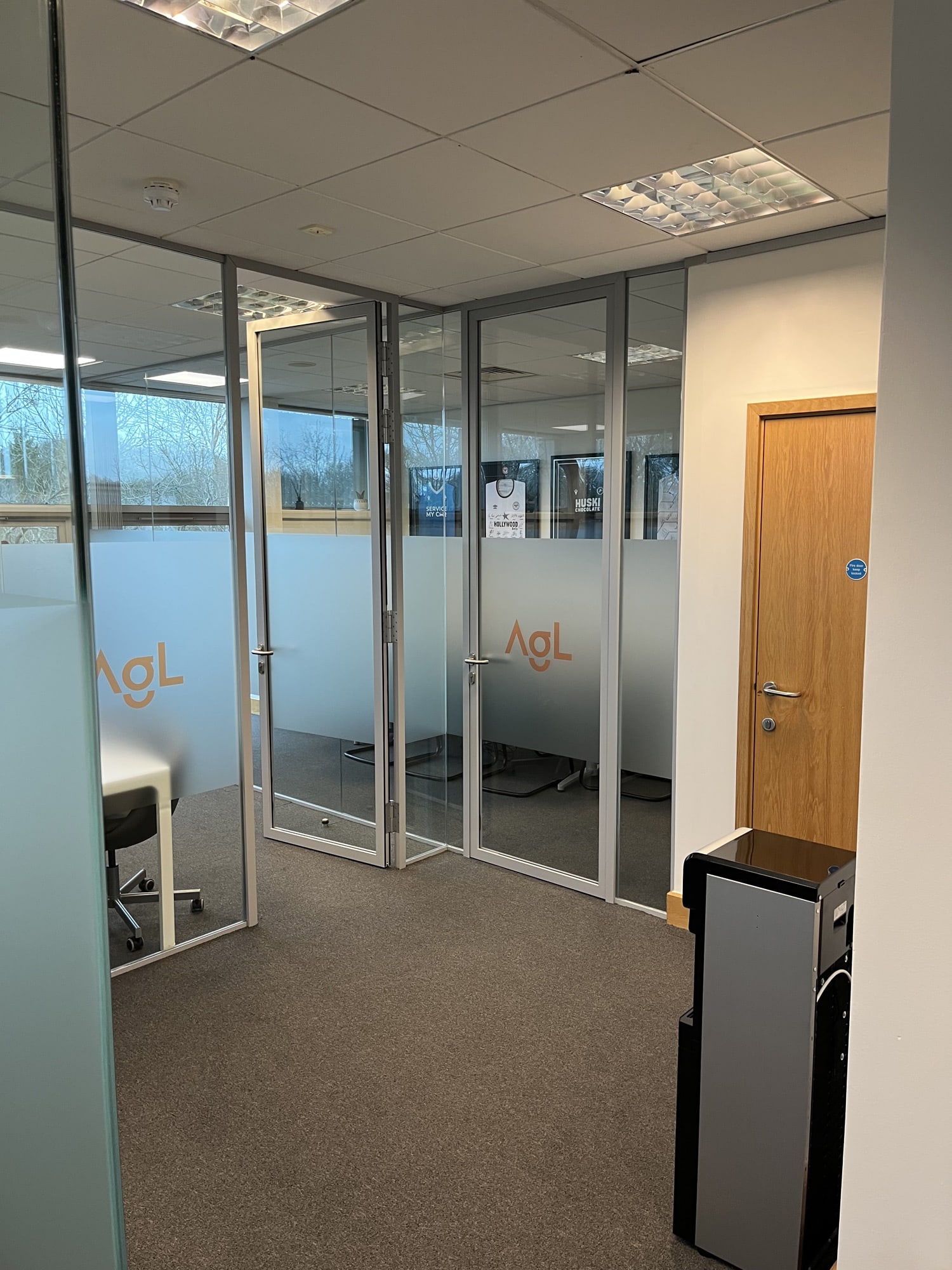
Don’t get me wrong, there’s absolutely a place for open, collaborative spaces. But I’ve walked into too many offices where everything is open plan. No meeting rooms, no quiet spaces, no privacy whatsoever. Just rows of desks where everyone can hear everyone else’s phone calls, conversations and keyboard tapping.
The result? Your staff are either constantly distracted or they’re spending half their day in coffee shops just to have a productive conversation or get some actual work done. You’re paying for office space they’re actively trying to escape from.
The fix: Balance. You need a mix of open collaborative areas and private spaces. Proper meeting rooms (not just a glass box in the corner that everyone can see into). Different work needs different spaces.
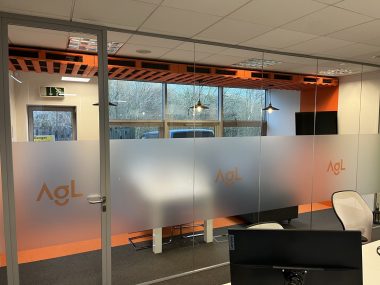
And this doesn’t mean ripping everything out and starting again. Strategic partitioning can create these zones without losing the openness where it actually works. We’ve done this dozens of times and the difference it makes to how people work is night and day.
2. Storage as an afterthought
Because cupboards aren’t sexy. Here’s a conversation I have at least once a month:
Client: “We need more space, we’ve completely run out of room.”
Me: Looks around at boxes piled in corners, files stacked on desks, equipment shoved wherever it fits. “Tell me about your storage solution.”
Client: “Well… we’ve got the server room…”
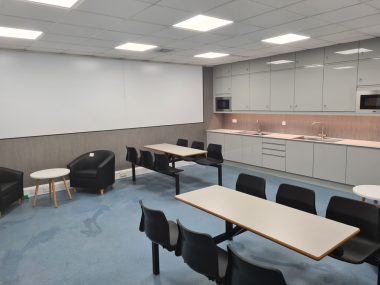
Storage should never be an afterthought, but somehow it always is. Always seems to be a blindspot at planning stage. Businesses plan their desks, their meeting rooms, their lovely reception area and then wonder where to put all the actual stuff a business uses and accumulates.
The fix: Purpose-built storage that’s integrated into your layout from the start. And I don’t mean DIY store flat-pack units that’ll be falling apart in two years. Proper furniture storage solutions that use vertical space, enhance your space and prevent your office from becoming an obstacle course.
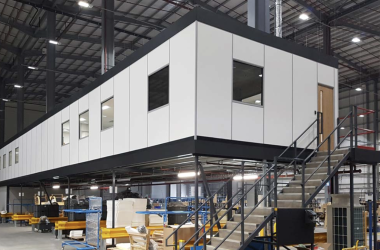
In warehouse offices mezzanines are brilliant for this. Archive material, seasonal equipment, bulk supplies can all go upstairs where they’re accessible but not cluttering your working space. The ground floor stays clear for the day-to-day and you’re not paying storage unit fees on top of your office rent.
3. Ignoring your actual workflow
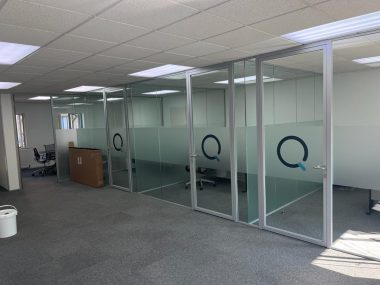
I have a lot of sympathy for this one. Business needs change and whether it’s a sudden shift or gradual evolution, I regularly see spaces that just don’t make sense anymore.
The design may have looked lovely and worked once upon a time but the business has gradually changed without an overall plan and how people actually move through and use the space hasn’t been considered.
Your accounts team is stuck in a corner miles from the printer they use fifty times a day. The sales team is next to the warehouse where the radio plays all day. The kitchen is on the Ground floor when everyone is upstairs, so staff have to traipse through the building dripping coffee on the carpet..
Small things, maybe. But they add up to wasted time, frustrated staff and a space that fights against productivity instead of supporting it.
The fix: Before you plan any layout, map out how your business actually works. Who needs to talk to whom regularly? What equipment gets used where? What’s the flow of work through your space? Then design around that reality, not around what looks good on a plan.
I always spend time asking these questions before we start any project.
4. Power and connectivity: the problem nobody plans for
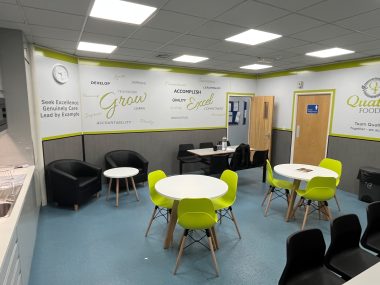
Extension leads daisy-chained across the floor or hanging from the ceiling. Cables taped to desks. A single socket shared between six people via a surge protector that’s seen better days. It’s one of the most common things I walk into and one of the most preventable.
The issue is that most offices were wired for a different era. Fewer screens, fewer devices, no need for USB charging points at every desk. But businesses move in, add people and equipment, and gradually patch their way around an infrastructure that was never designed for how they actually work.
It is a safety issue. It is a practical issue. And it becomes a very expensive issue when you eventually have to sort it properly, because it usually means working around everything that is already in place.
The fix: Think about power and data infrastructure at the design stage, not as an afterthought. Where are people sitting? What are they running? Where do you need hardwired data points versus Wi-Fi? Spec it properly upfront and you won’t be crawling under desks six months later wondering how it got so messy.
We build this into every project. It’s not glamorous, but getting it right is the difference between an office that functions properly and one that’s always one extension lead away from a problem.
5. No flexibility for the future
Here’s the thing about businesses: they change. You take on new staff, lose some, bring in new services, phase out old ones. Your needs in three years won’t be exactly what they are today.
Yet I see office layouts designed as if everything is set in stone. Walls that can’t be moved. Built-in furniture that’s there forever. Zero flexibility if things need to shift around.
Then, inevitably, the business evolves and suddenly the layout that worked perfectly is all wrong. But changing it means basically starting from scratch, which nobody wants to pay for twice.
The fix: Build in flexibility from the start. Modular partitioning systems that can be reconfigured. Furniture and storage that can move as needed. A layout with some breathing room, not everything packed in.
This doesn’t mean leaving the place half-empty “just in case.” It means smart design that can adapt. We use systems that look permanent and professional but can actually be adjusted when your business needs change. Because they will.
Getting it right first time
These mistakes are common because they’re easy to make, especially if you’re trying to plan an office fit-out on top of actually running your business.
But they’re avoidable. With proper planning, someone who knows what they’re doing and a focus on how the space actually needs to function rather than just how it looks, you can create an office that works for you now and keeps working as things change.
That’s what we do. Not the flashy stuff that looks good on Instagram but falls apart six months later. The proper job, done right, with the kind of standards I’d expect if I was the one paying for it.
If your office is making any of these mistakes, let’s have a chat. We can usually fix them without the drama and expense you might think.
Another Great project. Well planned, well executed and with great results. Well done Office Builders.Richard Smith
Ready to work with us?
Have an upcoming project you need quoting on – Click the button below to contact us today!
Get started